Thursday, November 18, 2010

#7 Termination to Plastic bag usage:

<http://freshneasybuzz.blogspot.com/2009/04/
     earth-day-2009-california-based-grocers.html>.
       What food is to humans: any edible, nutritious good that may or may not be essential for human growth and development. There are of course healthy foods and "junk" foods. Without food human beings and any other form on earth for that matter, would not be able to survive. Some people in the world may consider different ways in which to eat, in order to survive. While some people in the world hunt, gather berries, or collect rain water, some are able walk to a nearby market and some can simply jump in their car and take off down the road to a local grocery store—where water comes in a bottle.

       In present time, vehicles are the most popular and efficient means of transportation. So I must admit I do use vehicles to my advantage when is comes to saving some time. Not to mention the hassle I would have carrying my entire grocery load home safely.

       That is the dominant perspective for most in the 21st century; quick and easy. But sometimes this is not entirely true, because what is quick and easy usually means it comes with a hefty price tag for our environment. Plastic bags are such a huge problem. I mean it is easy enough to throw your groceries in a plastic bag and pile them in your car. But what some people do not realize is that you are creating a great deal of waste just by simply buying food. Bringing me thus to why I have decided to terminate this habit, and find alternate ways to change my behaviours.
             
       In an article, on the National Geographic website, I read that 80 percent of plastic bags received by the public are distributed from grocery stores and convenience stores. When not properly disposed of, they can end up in drains, animals may think their food, and most often end up in landfills. It was also estimated that each year 500 billion plastic bags are used worldwide, and less than 3 percent of those plastic bags end up along what’s called the litter stream. If you are wondering just how bad plastic bags are for our environment, then ask yourself this: If it takes almost a hundred years for a material, such as plastic to break down, then why do we still use it?

       On another website, products such as, cotton canvas reusable bags are introduced. They are a great replacement for, plastic bags provided at grocery stores. These eco-friendly bags are made very sturdy and strong so that the groceries can arrive at your home safely. They are very inexpensive to purchase and you will have the ability to use them over and over again.   
           
       I also included a video, to underline some more important facts about plastic bag usage. This video helps spread the word on how the former popular plastic polluting bags are now being replaced by eco-friendly reusable bags. This video also helps people choose positive ways change our habits. Greater detail is provided in this video; essentially making the public aware of their plastic intake, and hopefully re-focuses them to the eco-friendly way of life.


Tuesday, November 16, 2010

#6 Termination of Running Water while Brushing your Teeth

<http://www.hunterwater.com.au/images/
     Brushing_Your_Teeth(1).JPG>. 


        On a daily basis, people from all over the world are continuously consuming water. I have been tracking my own water consumption, essentially consuming 4159.5 liters of water weekly. This is a large amount of water being consumed over a course of one week and for only tracking one person. Now if you multiply that number by the amount of family members you have, in my case 4, then you can roughly estimate the amount of water being consumed in just one household. For example my household would roughly consume 16,638 liters in one week alone. Not to mention, this tracking sheet outlines the essential water needs to get through the week. There are many alternative ways to keep your water usage low, it’s just a matter of finding them in order to make that happen.
            
       For lowering my own water consumption I have decided to take baby steps and simply turn off the tap in between brushing my teeth. We all know that brushing your teeth is very important to one’s hygiene. Yet what some people do not know is the amount of water that is wasted by constant tap running.
            
       It is such a straightforward concept that is not acknowledged as it should be. This is the ultimate reason as to why I am stepping forward to help myself save any excess water from being wasted in this important process of the day.
            
       The research that I have found indicates some positive tips in order to help save wasted water along with some neat facts that will make you want to watch your own water consumption. This website states that a faucet without an aerator can use up to 6 gallons of water each minute. Turning off the tap while brushing your teeth can save as much as 3000 gallons of water per person for one year, according to the US Environmental Protection Agency (EPA).
            
       In the same website I gathered the most important tips to encourage people to help out our environment. Small things such as turning your tap to half blast or low pressure to wet the brush, and replacing the running tap with a glass of water, to then rinse your mouth and sink with. Surprisingly this saves a lot of water. This problem is something that all people must be aware of because even though water is a renewable resource it is disappearing fast. This becomes a very negative problem resulting in water shortages and drought. Drought and shortages result to the lowering of after tables and rivers that have or are drying up; all of which have occurred in our area.
            
       Another article I have read, states that many countries are pumping water from aquifers much more then they are supposed to. When aquifers begin to deplete, harvesting cutbacks begin to occur and food production is effected. There are many demands to balance the water consumption. Around the world tables are beginning to deplete, rivers are becoming dry and soon wetlands will disappear.


     <http://shareforus.com/20-ways-to-save-water>. 
       Here is a video I decided to include to show people how much water is wasted down the drain when you do not turn off the tap while you are brushing your teeth. It also reminds people how much money can be saved if you brush wisely.

Wednesday, November 10, 2010

#5 Termination of Drying Machine usage:

                                Portable Clothing Rack . 10 Nov. 2010. Personal photograph by author Trina W.

       Saving money is my passion. Anywhere I can save—I will. Cleaning clothes on the other hand, is a chore that most definitely cannot be ignored. In order to get through a single day, it is greatly appreciated to cover the body with material, also known as clothing. We all know that our clothes get dirty fast, from daily sweat to falling in mud. One of the eco-friendly methods I try to abide by is to wear my clothing at least twice before submitting to the cleaning process. Along with the cleaning process of clothes follows another step, the drying process.

       This to some people is a very important step, allowing them to wear nice, soft clothes—and yes it is much quicker to use a drying machine. In order to keep my eco-friendly persona up, I must find alternative ways to dry my clothes, by using the hang drying method to help me do so. One cool thing about this eco-friendly drying method is that the integrity of the clothing is maintained longer when clothes air dry.            

       There are many different ways to manually dry your clothing, one being a clothesline. This drying device simply is set up across a backyard, where you can then place all of your clothes neatly. This is where the sun comes into effect and uses it’s rays to potentially dry the clothes. Winter season however makes this process quite difficult. Not sure if anyone has ever had any success. With that being said, I have yet discovered another device that is simple, convenient and spacious. I call it the magic rack—a metal rack that can fold up and set in any space, it can be placed anywhere and can hold large load of clothing. My Personal Preference being the laundry room. These are also known to some as a "clothes horse". 

        An article I read, stated that hang drying your clothing also makes your chances of fading and shrinkage a lot lower then if you were to use a drying machine.

       Positive ways for the environment however consists of more then just shrinking and fading; it consists of saving energy. In another article, on the same website I read that, when it comes to energy star ratings, dryers are not even close—hence why they are unhealthy for the environment. Drying machines consume a ton of energy and also allow CO2, to enter our much-needed environment. In other words, by simply switching to hang drying you could save a large amount of unnecessary energy.

       I found a video clip that helps the understanding of how portable clothing racks work. How handy and effective they can be in a household or to the environment—as far as energy efficient. These racks can be purchased in many local stores, for example IKEA and they are surprisingly inexpensive. There is no reason why anyone would not want to purchase this product, let me tell you—it sure is easy, convenient and suitable for any household clothing operations.  

Tuesday, November 9, 2010

#4 Termination of Styrofoam usage:

        Simple things throughout the day tend to make the day seem a lot longer then it really is. Daily chores such as dishes, floors, and laundry seem to take up most of that time, leaving the day feeling busy and hectic. Without finishing these three main chores either daily or every other day, a household can ultimately become messy and disorganized. Maybe this is the explanation as to why people such as myself, become overwhelmed and resort to using unhealthy materials such as Styrofoam plates at meal times. I mean attending school for 5 hours a day, working for 6 hours a night and coming home to clean the dishes is not always what I look forward doing when I get home. 
            
       And its obvious my mother doesn’t want to come home and clean up after me. Some people may just be as lucky as to own a dishwasher, where they can then just pile the dishes in and within a few minutes they have clean dishes. In my house hold that is not an option, dishes by hand is the only way to clean. I guess this is one way my family is green is that we do not have a dishwasher, unless Trina is the latest and greatest brand of dishwasher. But seriously, how long does it take for someone to actually clean a load of dishes by hand…5 minutes maximum. I’m sure I can sacrifice 5 minutes a day, knowing I have not produced very much garbage.

       So today I am going to terminate any Styrofoam plate use, I am going to quit this lazy business and do my part for the environment—use reusable ceramic plates, and clean them by hand. Except my trick is to limit the water usage while doing so. This will limit any unneeded garbage and also any excess water. (Instead of filling my sink to the top, I will fill halfway—only what is needed.)

       Even though it should be known that Styrofoam is non-biodegradable, some people are still unaware of the problem Styrofoam poses to our environment. A website I found reveals the truth about Styrofoam, providing information on how this awful material resists the break-down process. It was stated that all around the world, down the coasts and water ways styrofoam has been accumulated due to its weightlessness and being un-properly recycled. Acting as a “worthless” scrap, many recycling groups avoid recycling this material. Majority of the people do not recognize how serious Styrofoam effects our ozone layer and what negative impacts it has towards global warming. The website also mentions that Styrofoam materials are manufactured using hydroflourocarbons and brominated-flame retardants which is essentially a problem when it comes to human health.    
           
     <http://www.greenandsave.com/green_news/sam_koch/
     serving_environmentalism_on_styrofoam_plates>. 


        I have included a video that will help with the understanding of the recycling process. There still are places that will recycle the Styrofoam and this is one of those groups. This video shows step-by-step instructions on how these recyclers go about recycling this material. 

Monday, November 8, 2010

#3 Termination of turning off any un-used lights: (Sunday, November 7th, 2010)

     <http://www.energycrysis.com/energy-crisis/general-information/
     diagram-a-light-bulb/>.


<http://www.popgadget.net/2008/04/energy_saving_a.php>. 
          

            Running late; probably the most annoying part about my day, but quite often something that I find myself doing almost everywhere I go. Running late can ultimately lead to forgetting some of the most important things that need to be done before leaving your home. Some people interpret the word “important” differently then others. For instance television being more important then family time or junk food being more important then dinner (this is not my definition of important). In many cases people ignore the fact that leaving candles on can perhaps start a fire and keeping lights on in the house, takes up a lot of energy and money. When the light is not in use, it is only common sense to turn it off.

Since our lives are very busy with many people to see and places to go, sometimes I myself, forget the lights are even on, and with out noticing, jolt out the door. With out a doubt, I will receive a text message or call from my mom, who gets of work only an hour before me, to remind me that I left the lights on again. “Trina, again you forgot to turn off your bedroom light.” “Trina the bathroom light was left on again, just please remember to turn the lights off.” And of course I reply saying “I’m sorry mom, I was just in a rush to get to school, I couldn’t be late for first period again!” I mean, YES I forget things sometimes…I’m only human.

'Only' human or not, I have decided to reduce Trina's Eco-footprint. To regulate this green change, I must ensure to take an extra minute to look around the house and turn off any un-used lights, this way I can conserve energy more efficiently.

An article I found introduces two main sources of lighting: incandescent light bulbs and florescent light bulbs. All light bulbs have an operating life (length), which is determined on the amount of times the light bulb is turned off and on. You should always turn off lights when they are not in use, unless you are returning to that room in less then 15 minutes. If you are planning on going out of the room any longer then 15 minutes then lights should most definitely be turned off.  
             
           The same article states that incandescent light bulbs are inexpensive but less effective—15%-10% of electricity is producing light while the other 85%-90% is distributing heat. And though florescent lighting costs are higher, they save energy and more importantly they are more efficient as far as operating life. Turning off florescent lights will also prolong the life of the bulb and in turn will lower costs as a result. For example, if you leave a 60watt light bulb on for one hour you will consume 0.06kWh. and if you have a 60watt light bulb off for an hour you are potentially saving 0.06kWh.
            
            In another website, I read many different examples and tips on ways to save energy, I came across a very useful statistic stating: one 100watt light bulb supplies the same amount of energy as two 60watt bulbs put together. Energy saving bulbs (florescent bulbs) save up to 75% more energy then your regular incandescent bulb. 
           
           You can do many things in order to stay green, all the while lighting up your home. Devices such as timers, motion sensors or dimmers have a huge impact on energy savings. All of these will help you save energy even if you forget to turn off the light every once in a while. After installing a motion sensor things such as forgetting to turn off the lights and running out the door will no longer be a problem. But for me, the old fashion way works the best; your brain can do many things…once you put it to work. Let me tell you I am looking forward to the text free days—not getting nagged to do something I should be remembering daily.


            I also included a video, which allows you to visualize and understand the prices of electricity, and how you can save energy while you are not in the room. Again products such as motion sensors  are applicable in this video. Tim Gibson explains how much energy is consumed through different light bulbs such as, incandescent and energy saving (florescent light bulbs). Again this professional includes alternative ways to stay greener and cheaper, and to overall help the environment last longer.


#2 Termination of Long shower taking/bubble bathing: (Saturday, November 6th, 2010)

      There is never enough time in the day to finish everything I must do. If you have heard this or perhaps thought this once before you should know that you have not fulfilled your day with enough YOU TIME. For me this time is most important, you get to sit, relax and stop worrying about absolutely everything. Bubble bathing and long showers for me, means relaxation. After a long day at school followed by a stressful and long night at work, without any hesitation I have convinced my inner Trina that a nice hot bubble bath is the perfect cure.
            
      They provide so many comforting feelings, starting with the happiness of being surrounded in warm water, feeling clean, free and relaxed.
            
      Even though Trina time is an important part of my week, I still have to keep my environmentally friendly persona. While tracking down my shower and bath usage I found water was being wasted either way I looked at it. This means that I must find an alternative way to fulfill my week that will help me stay true to my expectations as an environmentally conscious person.

      Trina’s Solution: Shorter showers—same effect, soothing warm and clean…and most importantly conservative water levels.

      On my water consumption sheet alone, over a course of a week I used over 600 liters of water between showering and bathing. According to an article by, John Carnet, toilets and long showers are the worlds biggest water wasters, using approximately 40% of the 350 gallons that are used daily. In the same article, I read that a Gray water recycling system is on its way, potentially allowing a house hold to reuse their shower, bath, dish, and laundry water by filtering it and depositing the water back into the system. The reused water is then stored in a storage tank, and is ready to be used again. 

      While learning about conserving water and terminating long showers and baths from my routine, I came a cross some professional tips: while shaving legs and applying soap, turn the water off, set a timer if needed to help make sure you stick to a certain time (5 mins.), try not to shower everyday, instead aim for every other day, and lastly if you cannot seem to save water the cheapest of ways then you should invest in a low flow shower head this allows your water to flow at a 1.5gpm instead of the average 6gpm. What many people fail to recognize is that while you conserve water, you also conserve energy.      

<http://www.google.ca/imgresimgurl=http://www.hunterwater.com.au/images/Shorter_Showers(1).JPG&imgrefurl=http://www.hunterwater.com.au/53.aspx&usg=__UNd5udIqcoUux2JcvqOsQc6kj8=&h=453&w=640&sz=51&hl=en&start=0&sig2=N 


        I also have included a video that briefly explains how much money one can save buy simply taking shorter showers. This video demonstrates average statistics that will help encourage those who decide taking 30 minute showers and beyond to reduce that time in half, or perhaps reducing that 30 minutes to a mere 5.


#1 Termination of plastic bottle usage. (Friday, November 5th, 2010)

           Convenience: lets face facts, plastic water bottles are by far the most convenient beverage to grab either on your way to work, school or sport game—at least in my household. Even though I am a tap water monster when I am at home, water bottles always seem to find their way into my weekly routine.
            
            Not many people think about where the water comes from or how much of a negative impact plastic bottles have on our environment. But I will be the first to admit that I do know where all of this water comes from and how badly our planet is effected, this is the number one reason why I chose to terminate the use of all non-reusable plastic water bottles from my routine.

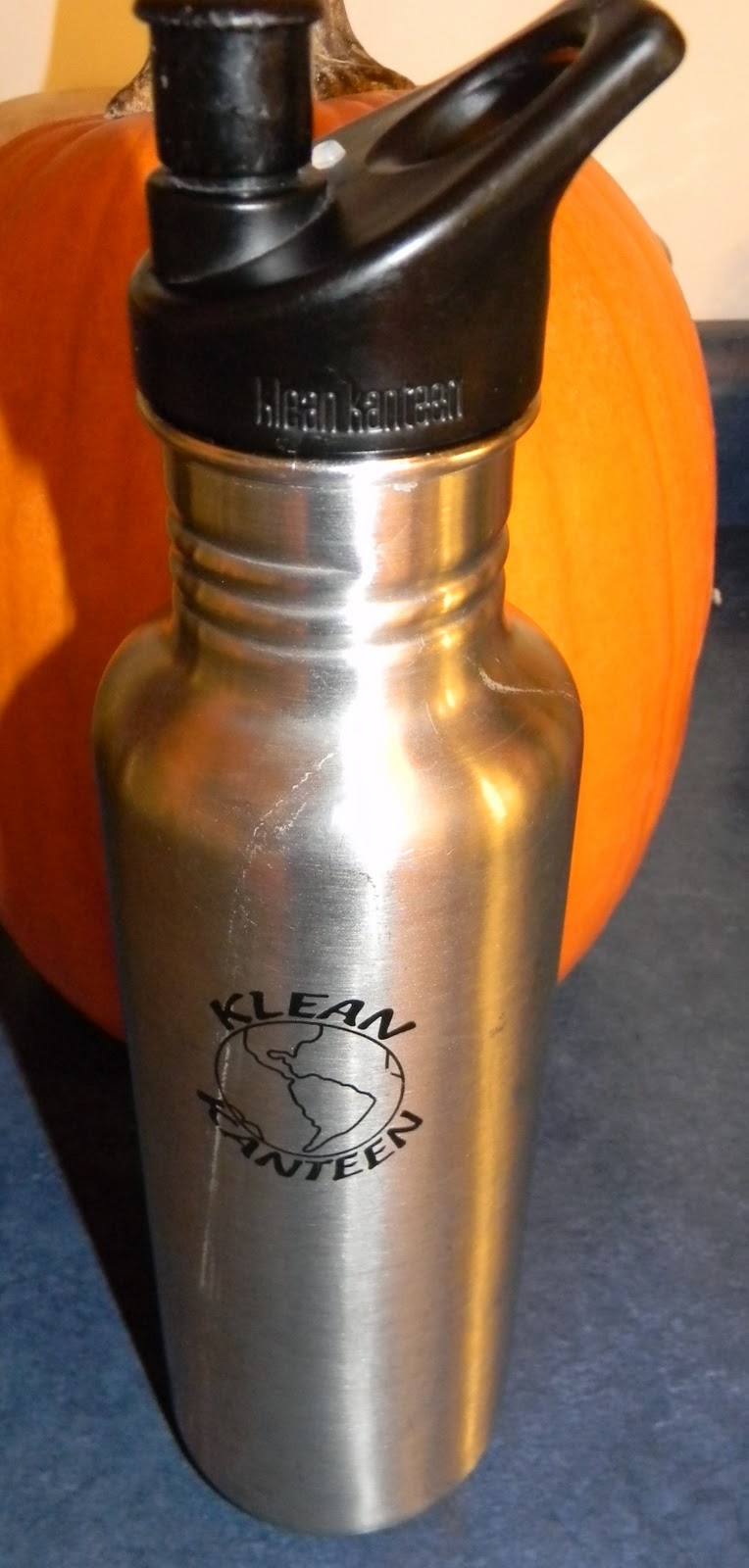
By simply buying a “Klean Kanteen” or in other words a stainless steel water bottle I can keep my tap water monster persona at home and at school. This means clean water all day long—with the exception of an occasional refill.

According to Chris Baskind the estimated annual amount of sales lay between 50-100 billion dollars yearly at a 7% overall rate. This means, undoubtedly, that our community is spending their earnings to buy bottled water, in fact the same water that flows out the magical faucets that run in our homes. Not only are we spending our hard earned money in un-necessary areas, but we are essentially spending it only to pollute our already vulnerable environment. These plastic bottles have no other option other then to become recycled; though recycling has yet to become the final destination of these water bottles and many other recyclable materials. In the same article, I read that 80% of plastic water bottles are thrown away, in other words—litter, which makes up approximately 1.5 billion tons of waste each year.
           
           There are many alterative ways to terminate the use of plastic water bottles. Families such as my own have invested in a Brita filter. This allows us to have cold water on a daily basis, by filling the top container with tap water, allowing it to trickle down the filter into the main water jug area. You can then place this handy jug into a fridge where it can cool so your water is the right temperature. You can always refill this device provided that you also replace the filter, which conveniently is only in need of replacement every so often. Another alternative in reducing the use of plastic bottles is to invest in a carbon filter. That device fits nicely on your faucet, allowing you to have purified water straight from the facet into your glass or Klean Kanteen.

            I also included a video clip, which explains the bottled water production, and how much money is actually being spent on bottled water. Stephanie Soechtig is the lead environmentalist who is being interview to bring bottled water awareness. She gives a detailed explanation on the amount of money spent on bottled water—essentially tapped water. Stephanie also shows a truck (exemplar model) that is designed to collect plastic bottles, to notify the public on how much plastic water bottles are actually consumed. The impact on the environment is one of the most important points that she provides. While she voyages on these plastic collecting expeditions, she also hands out stainless steel bottles, also known as “Klean Kanteens” in order to inspire the public to drink tap water instead of bottled water.  


Klean Kanteen. 9 Nov. 2010. Personal photograph by author Trina W. 
Personal photograph by author Trina W.